A leaf does not rot the same day it falls— Scenes from a Marriage
Jun 27, 2026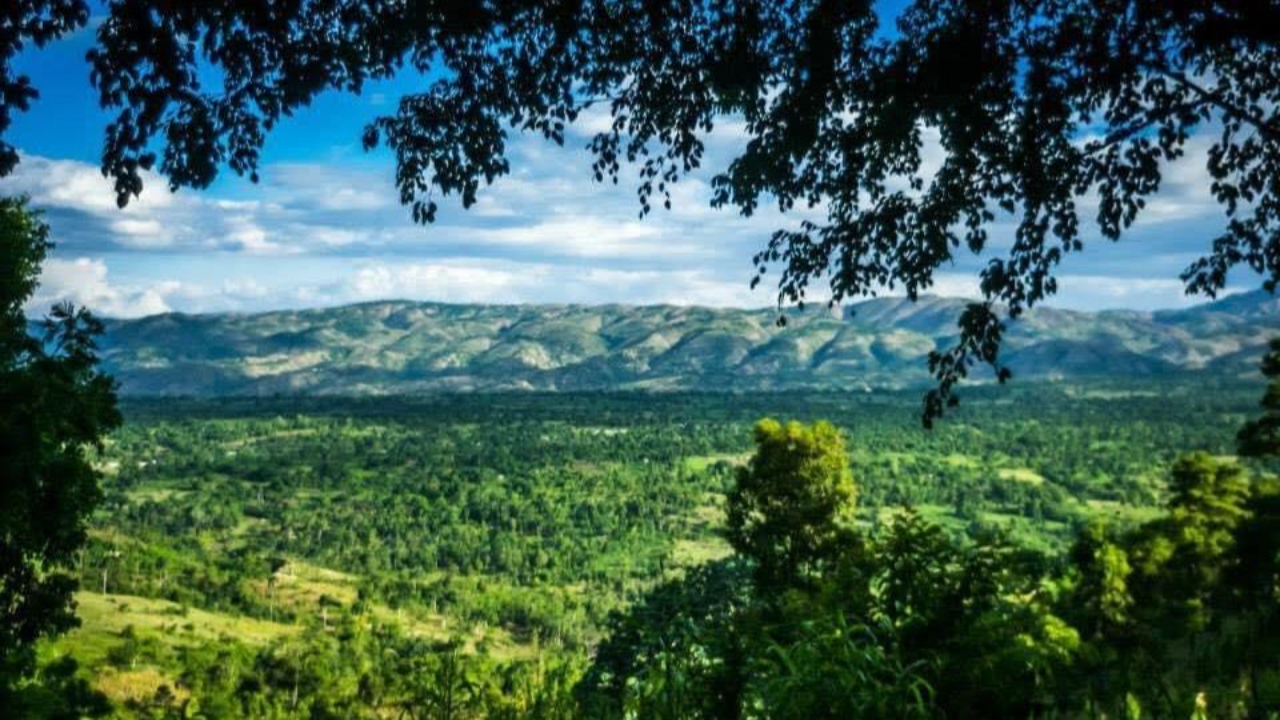
Dèyè mòn gen mon, (Beyond the mountains, more mountains).
How to write the scenes from your life you have been avoiding for twenty years.
How do you write the scenes from your life you have spent decades not-writing? The ones too big to face at your kitchen table?
This is one of them.
This post is the third in a series about Madam Kòmandan, the screenplay I've been developing at Aurora — the writers retreat I built on an Arctic island in Northern Norway. It is the year my husband was in prison in Haiti, and I was outside it with a newborn, trying to get him out.
If you read the last post in this series you know I tied a rope to a cemetery gate, three days after a vodou ceremony in the mountains. The lwa Gran Brigitte had promised to help. Now all we had to do was wait.
This is what came next.
The Trial
Eight months in. The trial begins — and I find myself crying my eyes out in a courthouse bathroom. From the screenplay I am writing at our writers retreat in Arctic Norway.*
By June, eight months had passed since Jimmy's arrest, and none of our efforts had produced anything. Hours of waiting in offices, countless meetings with men in suits, conversations with several lwa — all of it had come to nothing. My father-in-law took me to see a judge friend of his at his private home, who told us, without quite asking, that university fees for his children were higher than his judge's salary could cover. The message was clear. My mother in Norway sold land she had inherited from her parents to help pay our lawyers and the gifts that needed to change hands.
In mid-July, we learned the case would finally be heard. Three judges had been allocated, starting end of the month at the Palace of Justice in downtown Port-au-Prince.
The trial was ridiculous. The main witness, the driver who had accused Jimmy and his officers of stealing the money, had vanished — rumour had it he had left the country. Another witness, a blind man, said that although he could not see Kòmandan steal anything, he had smelled his perfume. He was pretty sure it was Giorgio Armani, and the only police he knew who wore that, was Jimmy.
The judges only met once a week, on Wednesdays. One Wednesday no police car was available to bring Jimmy the five hundred metres from the prison to the courtroom, so the case was postponed. Another Wednesday, mid-session, the judges pulled up their black cloaks and ran out of the building, yelling that they had to collect pay cheques they had been waiting for since the previous year.
One of these Wednesdays I had left Dino at home with his auntie Marie — the long hours in the warm courtroom were too much for him. As the lawyer and the judges pored over details, I realised my white shirt was developing two growing wet patches. My breasts were leaking, and they ached. I went looking for a bathroom.
I could not find one in the rickety old building. Finally someone told me to ask for a key in reception. After what felt like forever, I locked myself into a tiny toilet. There was no running water — only a bucket next to the toilet for flushing, except there was no water in it either. Over a dirty sink, I started squeezing milk from my breasts.
I imagined what I must have looked like from the outside — a sweaty, white foreigner desperately milking herself between witness statements, for her husband on trial, in a country far away from home. I started crying. I was feeling so sorry for myself and I hated what was happening to us. Eventually I calmed myself down and told myself as I walked back to the courtroom, one day you will be able to laugh about this.
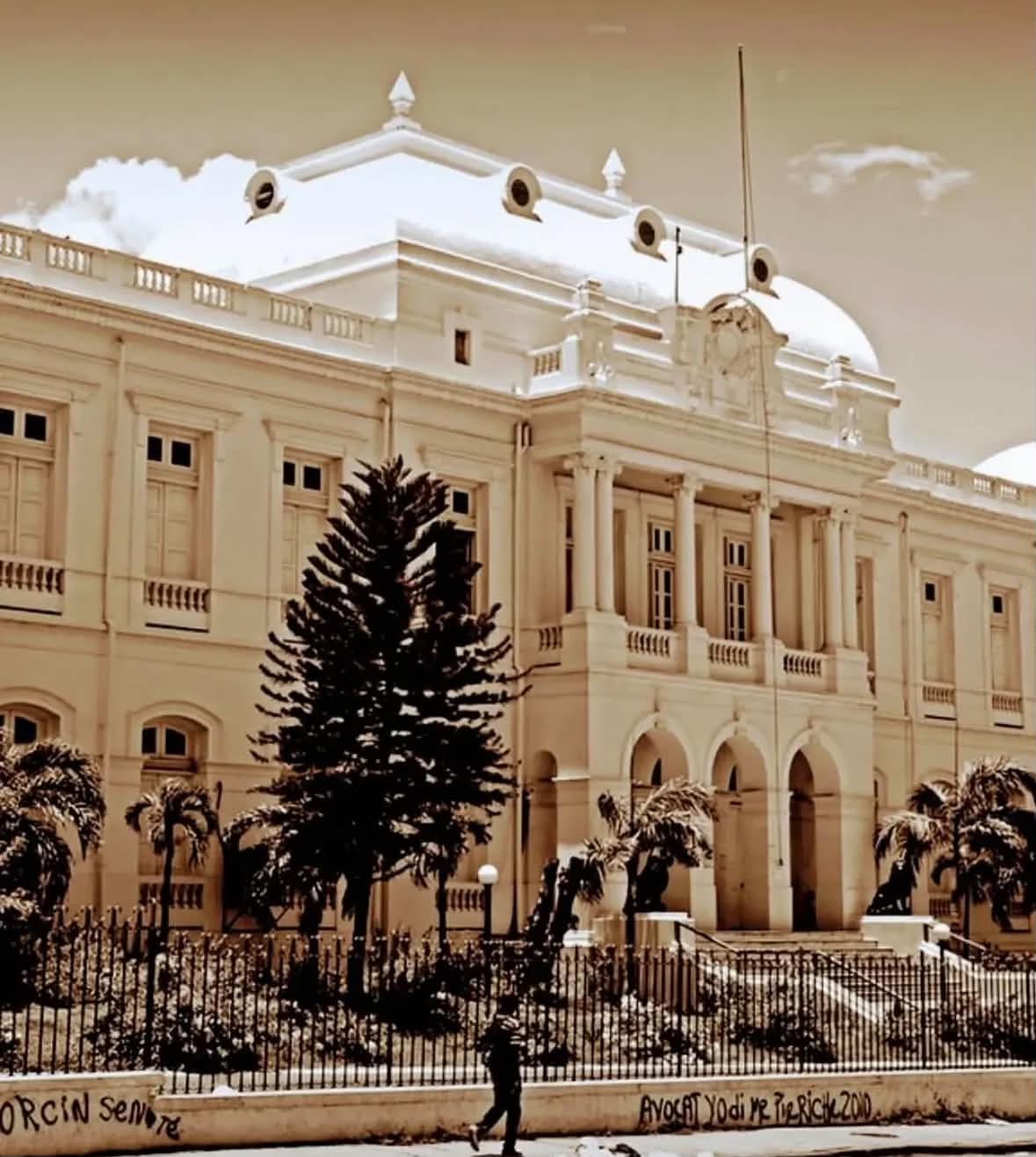
The Palace of Justice in Port-au-Prince— where the trial took place. (The building was later completely destroyed in the 2010 earthquake.)
The trial dragged on for months. When the judges finally announced they had heard the case and all available witnesses, they concluded that it had no merit and that Jimmy was free to go. I could not believe it. I was overwhelmed and happy — but alas, not for long. There was one more hurdle: the commissaire du gouvernement in Petit Goave had to sign the release papers. He was 'unavailable.' Nowhere to be found. Jimmy went back to prison from the courtroom, waiting for the mood of one government official.
The letters from Jimmy were darker these days. He was angry, and rightly so. I got the short end of his frustration, and even when I was upset that the anger landed on me, I understood. He was rotting away in a place you would not keep a dog for an hour.
The Prayer
A desperate moment in a Haitian prison yard. From the screenplay I'm writing at our writers retreat in Northern Norway.*
During another visit in prison mid-week, the guards had let me in. They knew madam kòmandan very well by now and told me to wait in the yard while they went to fetch Jimmy.
I had tried everything by then. The rope was still tied to the cemetery gate. I had walked up a mountain in the dark and asked Gran Brigitte for help in the only way I knew how. I had stopped expecting an answer.
If the food in the first prison in Petit Goave had been bad, what was served in the national penitentiary was not worth calling food. Prisoners who had family or could afford it would get better meals delivered, by paying the guards. Every day, long lines of people stood outside the blue-and-white painted walls in the sun, waiting hours to deliver proper food to their loved ones inside. Each dish had to be tasted in front of the guards, to make sure it was safe. I hated this part of my visits — standing in front of the guards and proving I was not about to poison Jimmy with my own food. To this day I cannot stand sòs pwa, having been forced to swallow spoonfuls of lukewarm bean sauce after waiting in line for hours, feeling angry and humiliated every single time.
As I waited for him in the open courtyard, I started having an inner conversation. 'God, I am not sure what I am doing wrong, but I think it's time for me to talk to you. Please, I know you and I haven't had much of a relationship before, but today I am pleading you for help. Please help us get Jimmy out of this hellhole. Show me a sign. We are desperate.'
Tears streamed down my cheeks. I felt empty, my energy low after months of fighting a corrupt system in a country so foreign to me in every aspect of the word.
Jimmy finally came out and sat next to me. I held his hand. 'I'm so tired, Jimmy,' I said. 'How much longer must we endure this?'
Jimmy sighed and tightened his hand around mine. 'Fèy pa janm pouri menm jou li tonbe nan dlo,' he said. 'A leaf does not rot the same day it falls in the water. It takes the time that it takes. But all will be well, I promise, my love. The leaf already fell, all will be well.'
I hugged him and said I had to leave. I had a meeting with the Minister of Justice at his office nearby.
'I will see you Saturday, God willing,' I told him. 'Mwen renmen ou', 'I love you.'
The scenes in this post are ones I could only write at Aurora — our writers retreat in Northern Norway — because they were too big to write at my kitchen table. If you have a scene like that of your own, keep reading. There are details about the retreat at the bottom.
The Minister
A meeting at the Ministry of Justice — and one short phone call. From the screenplay I'm writing at a writers retreat in Senja.
I walked the few blocks to the Ministry of Justice with my father-in-law. Inside the air conditioned building it was nice and cool, what a difference to the prison I had just come from, I thought to myself.
The minister sat behind a large mahogany desk, wearing a crisp white shirt, his office walls decorated with beautiful Haitian paintings. As he stood up and shook my hand I could smell the sharp scent of citrus cologne. 'Welcome Madame. Let's figure out what is going on with your husband. Tell me everything.'
I was taken aback — every meeting until now had ended with the message that there was absolutely nothing anybody could do. I explained that the trial was over, that the judges had concluded Jimmy was a free man, but that the commissaire du gouvernement had not been available to sign his release papers.
I started crying, choking on my words. 'I don't understand. He is innocent of this crime, so why is he still locked up?'
The minister reached for the phone. 'Give me a minute. I will sort this out now. This is getting ridiculous.'
He called the prison director. Maybe he thought I didn't understand Creole, but the conversation was short and sounded something like this: 'zanmi m, my friend, you cannot make this young mother suffer much more. Just release the poor guy. I owe you one. Mesi.'
He smiled at me. 'Go collect your husband. It's all taken care of. I wish you both the best.'
The Release
A guard's quiet decision, - but where is my husband? From the screenplay I am writing at our writers retreat in the Arctic.*
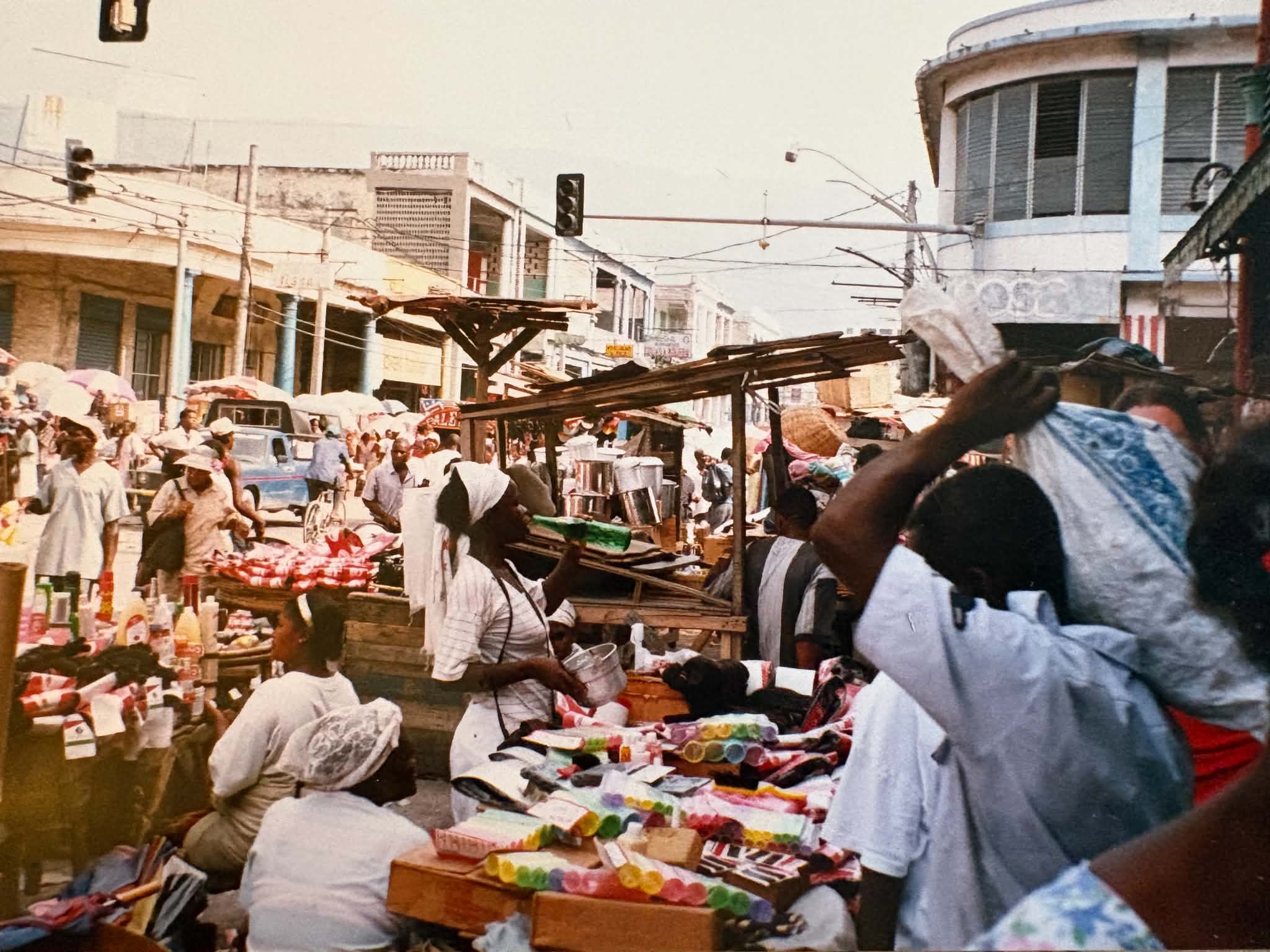
Downtown Port-au-Prince in 1999 — somewhere between the national penitentiary and the Ministry of Justice.
I ran the few blocks back to the prison, keeping an eye on my father-in-law who was slower than me. We entered the gates, hearts beating fast, asking to see Jimmy.
The guards looked surprised. 'Why are you here? Jimmy was released an hour ago.'
I stared. 'Excuse me? I am bringing the release papers, directly from the minister's office. How has he already been released?'
The guard took me aside. 'Look, we all knew he was kept here because of a personal vendetta. They stalled the paperwork just to make him suffer more. We didn't think it was fair, so we decided to let him go, quietly and silently, without any fuss. Now, go home and make sweet love to your husband. You deserve it.'
I thanked the guard, gave him a big hug, and told him I would never forget this moment as long as I live. We grabbed a tap tap and went straight home.
As I walked inside, I could hear Jimmy laughing, making jokes at the kitchen table with Ronald and Jocelyne, his childhood friends who shared the house with us.
'Jimmy!' My heart almost stopped. 'I can't believe it. It's over, my love.'
Later that evening, Jimmy told me he had not known why the guard suddenly came to fetch him. It was just after I had left. The guard had grabbed his arm and said, 'Kòmandan, time to leave. Don't make a fuss, don't take anything with you, just walk with me quietly, and I'll make sure you are a free man in a few minutes.'
Knowing the system in Haiti, we both understood that the guard had taken a big risk on his own account.
To this day I tear up thinking about that conversation I had on a cement bench in that prison, at my lowest, desperately pleading with the universe for help.
I have never figured out which one of them did it. Gran Brigitte. God. The minister. The guard. Maybe all of them. A leaf had fallen. Maybe several.
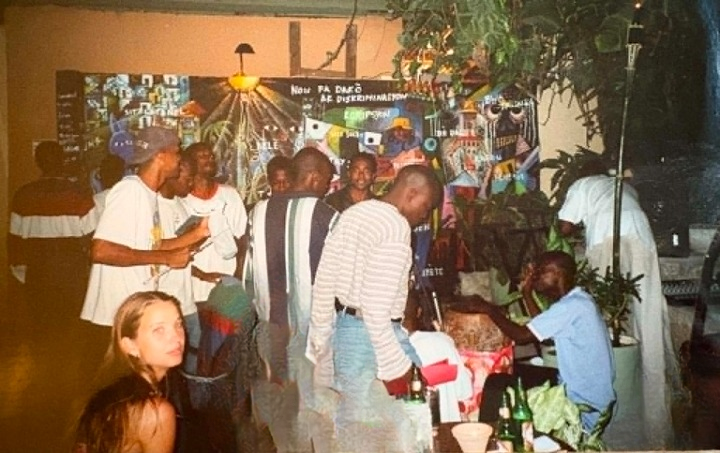
Petion-Ville, late 1990s. Celebrating Jimmy's release from prison, and when I thought the worst was behind us.
About Aurora — The Writers Retreat in Senja, Northern Norway
Aurora is a week-long writers retreat held twice a year on the island of Senja, above the Arctic Circle. We host a maximum of 12 writers at a time. Small group. Real mentors. A long enough stretch of time to actually fall into the work
The next edition runs in January 2027.
In-person mentors for January 2027: Stephanie Joalland and Sean McConville on screenwriting. Nicholas Pinnock (Top Boy, For Life) on story and performance. Brendan Foley (Sherlock & Daughter, The Man Who Died). Bessie Carter (Bridgerton, Howards End) and Shelly Goldstein (Emmy-winning TV writer) joining the lineup.
Location: Senja, Northern Norway. Above the Arctic Circle. Polar nights and Northern Lights season.
Aurora is one of the few writers retreats in Europe built specifically around the demands of film and TV writing — small group, real mentors, a current project on the table.
Who it's for: Aurora is built first and foremost for writers working in film and TV — screenwriters developing a feature, a pilot, or a series. All other serious writers are welcome too: memoirists, novelists, playwrights.
Each writer at Aurora works on a current project — a screenplay, a pilot, an idea for a story — with one-to-one mentor sessions, long writing blocks, and the kind of group feedback you only get when a small group of serious writers are in the same room for a week.
If you have been searching for a screenwriting retreat, a writers retreat for film and TV, a writers retreat in Norway, or a creative writing retreat with serious mentors and a ridiculous amount of natural beauty — this is for you.
Read more about Aurora January 2027 → Aurora Writers Retreat
(Jimmy was home. He was laughing at the kitchen table with our friends. I had my husband back, and I thought the worst was behind us. The worst, as it turned out, was years away — a Saturday morning on a sunny balcony, a newspaper, and a single paragraph in the obituary section that would rearrange everything. I am working on those scenes too, slowly, in Senja, in the blue Arctic light. I will tell you about them. Just not yet.)
Hope to meet you in Senja x
Ingvill
About the author: Ingvill Konradsen is a Norwegian writer and the founder of Aurora — a writers retreat for film and TV writers in Senja, Northern Norway. She is currently working on her first screenplay.
Stay connected with news and updates!
Join our mailing list to receive the latest news and updates from our team.
Don't worry, your information will not be shared.
We hate SPAM. We will never sell your information, for any reason.